How to Descale an Electric Kettle and Stop Limescale

Every kettle in a hard-water home grows the same chalky crust on its floor, and the fix is the same ten-minute chemistry every time: a mild acid, a little heat, a rinse. This guide covers why scale forms and what it costs you, the classic vinegar boil, the odor-free citric acid method, an honest word about lemons, the parts of the kettle people forget, and a descaling schedule matched to your water hardness.
Why kettles scale up
Hard water carries dissolved calcium and magnesium bicarbonates. Heat forces them out of solution as solid calcium carbonate — limescale — and a kettle is a machine for applying exactly that heat daily. The scale precipitates on the hottest surface first, which is the element plate at the bottom, then creeps up the walls and colonizes the spout filter.
The flakes you sometimes see swirling in a fresh cup are harmless — the same minerals you drink in the water — but scale still costs you three ways:
- Energy and time. Scale is an insulator. A crusted element has to push heat through a mineral blanket, so boils take longer and use more electricity.
- Kettle lifespan. Insulated elements run hotter to compensate, and overheating is what kills kettles. Thick scale can also trigger the boil-dry cutoff early or make the kettle noisy and rumbling.
- Taste and texture. Flakes in the tea, a faint chalkiness in delicate brews, and a scummy film on top of black tea in very hard water.
Method 1: the vinegar boil
The classic, with everything already in your cupboard:
- Fill the kettle halfway with equal parts white vinegar and water (enough to submerge the scale line).
- Bring it to a boil, then switch off and let it stand 30-60 minutes — the dwell does the dissolving, not the boil. Heavy crust can sit for several hours or overnight unplugged.
- Pour out, wipe loosened residue with a soft sponge or bottle brush, and rinse.
- Boil and discard one or two kettles of fresh water until no vinegar smell remains. This is the step that makes or breaks the method — skip it and the next three teas taste like pickle.
Caveats: the hot vinegar smell fills the kitchen, and a minority of manufacturers advise against vinegar for their seals or exposed elements — glance at your manual once before the first time. Do not boil full-strength vinegar; half-and-half is plenty. If the first round leaves patches of crust, repeat the soak rather than reaching for a scraper — a second gentle pass always beats one abrasive one.
Method 2: citric acid (faster, no smell)
Citric acid is the active ingredient in most commercial descalers, and it beats vinegar on every count except cupboard availability:
- Fill the kettle halfway with water and bring to a boil.
- Switch off, add 1-2 tablespoons of citric acid powder (or a measured dose of a liquid descaler), and watch it fizz against the scale.
- Let it work 20-30 minutes, wipe, rinse, and do one rinse boil. No lingering odor, no marathon rinsing.
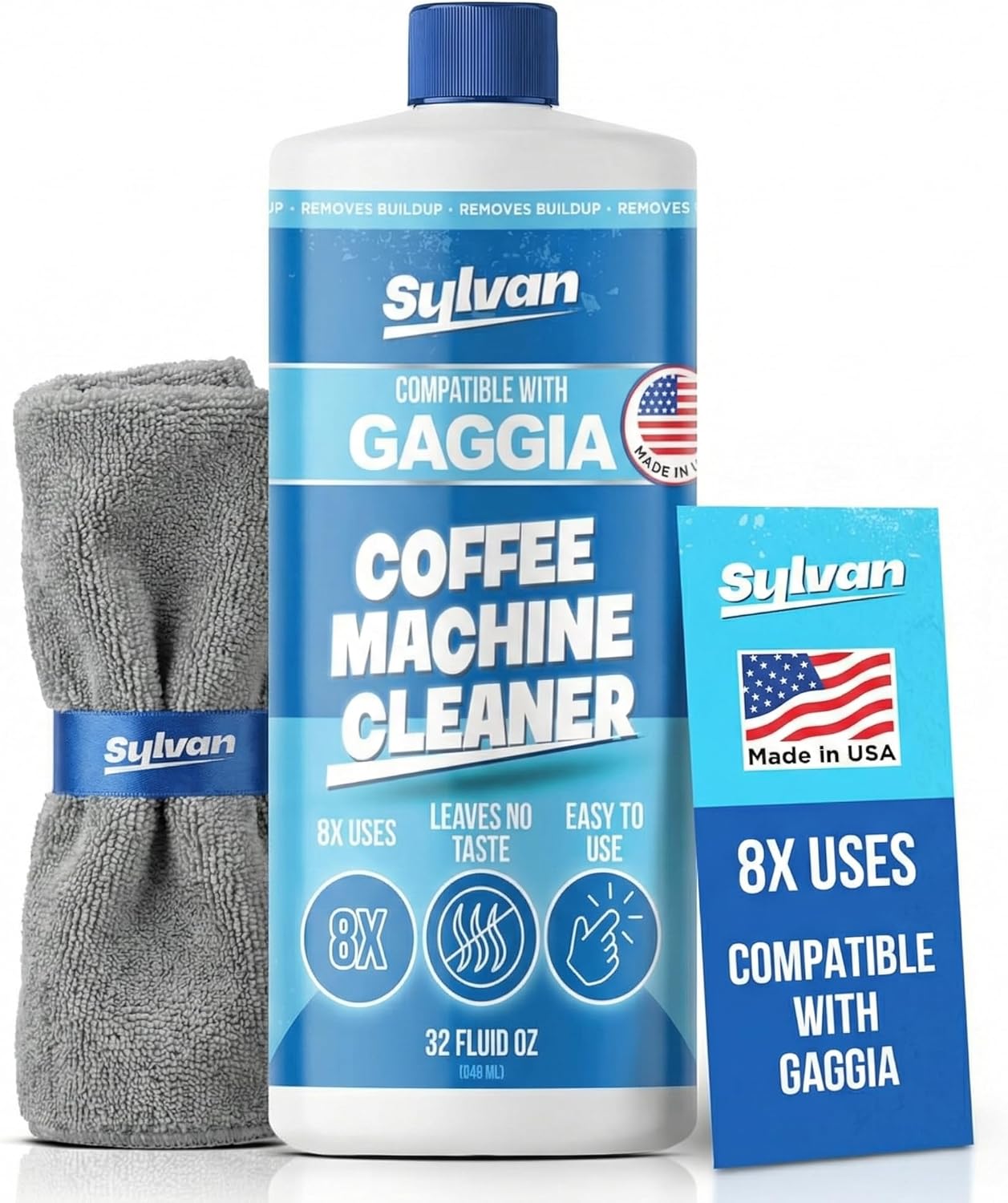
If you would rather pour than measure powder, a liquid food-safe descaler made for coffee equipment is the same chemistry pre-diluted: our descaling solution is formulated for espresso machines — the most scale-sensitive appliance in the kitchen — and handles a kettle with ease. One 32 oz bottle covers the kettle, the coffee machine (see the descaling guide for that procedure), and the humidifier too.
The lemon method: honest take
Boiling lemon slices is the internet's favorite kettle tip because it smells wonderful, and that is genuinely its main output. Fresh lemon delivers citric acid at a few percent concentration, diluted further by the kettle water — enough to brighten a light film, nowhere near enough for the gray plate of established scale. Bottled lemon juice used generously gets closer, but at that point plain citric acid powder is stronger and cheaper. Verdict: fine as monthly freshening in a soft-water home, not a removal method. Use it after a real descale if you want the scent.
The parts everyone forgets
- The spout filter. Most kettles have a removable mesh screen in the spout that silently catches flakes until it half-blocks the pour. Pop it out, soak it in your vinegar or descaler solution 15 minutes, brush with an old toothbrush, rinse, and refit.
- The exterior. Unplug first. Stainless bodies want a damp microfiber wipe and a dry polish (wipe with the grain to avoid streaks); plastic bodies tolerate mild soapy water. Keep water away from the base contacts and the plug socket, and never immerse the kettle.
- The base and cord. Crumbs and dust collect on the powered base; a dry brush or cloth keeps the contact area clean.
- The water gauge. On kettles with an external sight glass, scale clouds it from inside — the descale soak clears it if the solution reaches it, so fill above that line occasionally.
Never use steel wool, scouring powder, or hard scrapers inside a kettle. They scratch stainless steel and strip the protective layer on coated elements, and scale grips scratched surfaces harder — you will descale more often, not less. Acid plus patience beats abrasion every time.
Special cases: gooseneck, variable-temp, and stovetop kettles
A few kettle types deserve their own notes:
- Gooseneck pour-over kettles scale inside the long narrow spout, where no brush fits and poured descaler barely lingers. Fill the kettle with descaling solution above the spout junction, then tip and hold the kettle so the solution stands in the spout itself for a few minutes, repeat from a couple of angles, and flush with several full pours of fresh water. A slow, sputtering pour from a gooseneck is almost always spout scale, not a bent tip.
- Variable-temperature kettles hide a temperature sensor in the base plate; scale over the sensor makes readings drift so the kettle overshoots or never reaches setpoint. A normal descale fixes it — just make sure the solution covers the sensor area and avoid abrasives near it.
- Stovetop kettles follow the identical chemistry: simmer the half-vinegar mix or dissolve citric acid in hot water, stand, rinse. Whistling models also want the spout cap and whistle plate soaked, since scale there muffles the whistle and slows the pour.
How often: a schedule by water hardness
| Water hardness | Signs | Descale every |
|---|---|---|
| Very hard (over 180 ppm) | Visible crust within days, flakes in cups, scum on tea | 2-4 weeks |
| Hard (120-180 ppm) | Crust within a couple of weeks, cloudy element plate | Monthly |
| Moderate (60-120 ppm) | Slow film, occasional flakes | Every 2 months |
| Soft (under 60 ppm) | Little visible buildup | Every 3 months or as seen |
Not sure of your hardness? Your water utility's annual quality report lists it, or a 10-pack of aquarium test strips settles it in thirty seconds. The visual trigger never lies either: crust or flakes means descale this week. And if you move house, re-check — hardness varies enormously between municipalities, and a schedule tuned to soft city water will fall badly behind on a well.
Slowing the buildup between descales
- Empty the kettle after use instead of letting water stand overnight — evaporating water leaves its full mineral load behind.
- Boil what you need. Repeatedly re-boiling a full kettle concentrates minerals in the leftover water.
- Use filtered water if you already run a pitcher filter; carbon-plus-resin filters reduce temporary hardness noticeably.
- A clean steel scale collector (a mesh ball sold for this purpose) gives scale a sacrificial surface to grow on and rinses clean — an old trick that genuinely works for stovetop and electric kettles alike.
Ten minutes a month keeps the boil fast, the tea clean, and the kettle alive for years. The same acid-and-rinse logic applies across every scale-prone appliance in the house — see our guides to cleaning a humidifier and the ice machine, and stock the cupboard from our Kitchen & Home collection.