How to Descale a Gaggia: Classic, Brera & Beyond
To descale a Gaggia, dissolve a citric-acid descaling solution in a full tank of water, then — on a manual machine like the Classic Pro — pull the solution through the steam wand and brew head in stages with 10-15 minute pauses, and — on a super-automatic like the Brera — run the built-in descale program and let the machine pace itself. Finish with two full tanks of fresh-water rinse. Total time: 30-45 minutes, mostly waiting.
Descaling is the single most important piece of gaggia maintenance, because scale is the one failure mode that quietly affects every shot and eventually kills the boiler. This guide covers what limescale actually does to espresso, how often to descale for your water, exact step-by-step procedures for the Classic/Classic Pro and for the super-automatic range, the chemistry question (citric vs. sulfamic vs. vinegar), and the cost math on solution versus single-use kits.
What scale does to your espresso
Every liter of tap water leaves its dissolved calcium and magnesium behind when heated — and an espresso boiler is a scale factory: small volume, high heat, constant refills. A limescale espresso machine problem shows up in this order:
- Temperature drift. Scale is an insulator. A coated boiler and thermostat read and transfer heat inaccurately, so shots run cooler and sour even though nothing on the outside changed.
- Flow restriction. Scale narrows the gicleur, valves, and water paths. Shots slow down, the pump strains audibly, and steam pressure weakens.
- Component failure. Flakes jam the solenoid or OPV, scale eats heating-element efficiency, and in the end the boiler or element fails outright — the most common death of a neglected Classic.
The insidious part is the pace: scale builds in weeks but degrades espresso over months, so your shots drift slowly enough that you blame the beans. A descale resets the machine to day-one thermals, and most people taste the difference on the first shot after.
How often to descale, by water hardness
| Water hardness | Daily use (2+ drinks) | Light use |
|---|---|---|
| Hard (over 200 ppm / 12 gpg) | Every 4-6 weeks | Every 2 months |
| Moderate (100-200 ppm) | Every 2-3 months | Every 3-4 months |
| Soft or filtered (under 100 ppm) | Every 3-4 months | Every 4-6 months |
Unsure of your water? Test strips cost a few dollars, or check your utility's annual water report. Super-automatics (Brera, Anima, Accademia) track water volume and hardness settings and display a descale alert — honor it promptly rather than snoozing it; the alert is calibrated to catch scale while it is still thin and fast to dissolve.
Descaling a Gaggia Classic / Classic Pro, step by step
The Classic has no descale program, so you are the program. Here is how to descale Gaggia Classic machines safely — this same procedure covers the Classic Pro and most manual espresso machines:
- Prep. Machine off and cool. Remove the portafilter, dump the drip tray, and take out the water tank. Remove any softener pouch or filter from the tank.
- Mix the solution. Fill the tank with fresh water and add descaling solution per the bottle's dilution. Reinstall the tank.
- Draw solution into the boiler. Switch the machine on (no heat needed yet for the first draw). Open the steam knob with a pitcher under the wand and run the pump until solution flows, then close the knob. Run a few ounces through the brew head too.
- Heat and dwell. Let the machine reach brew temperature, then switch it off and let the solution sit in the boiler for 10-15 minutes. Warm citric acid is dramatically more effective than cold.
- Flush in stages. Turn the machine on and pull about a cup through the brew head, then a cup through the steam wand. Pause 10 minutes. Repeat until the tank is nearly empty. The staged dwell-and-flush is what dissolves established scale rather than just rinsing the loose film.
- Rinse thoroughly. Wash the tank, fill with fresh water, and flush the entire tank through the brew head and wand. Then do a second full tank. Residual descaler is tasteable, so do not shortcut the rinse.
- Re-prime and test. Reinstall the filter/softener if you use one, pull a blank shot of plain water, then a sacrificial espresso. Normal flow, strong steam, and no citrus note means you are done.
Gaggia Brera descaling and other super-automatics
Gaggia Brera descaling — and the same for the Anima, Accademia, Babila, Cadorna, and Velasca — uses the machine's built-in descale cycle, which automates the dwell-and-flush rhythm:
- Empty the drip tray, remove the water filter (Intenza or similar) from the tank, and place a large container (at least 1.5 L) under the steam/hot-water spout.
- Fill the tank to its descale line with water plus the dosed solution.
- Start the descale program per your model (on the Brera, hold the hot-water button; menu-driven models have Descale in settings). The machine dispenses solution in timed pulses with pauses — this takes 20-30 minutes. Do not power it off mid-cycle.
- When prompted, rinse the tank, refill with fresh water, and let the machine run its rinse phase. If your model only prompts one rinse, run a second tank of fresh water through the hot-water spout manually.
- Reinstall the filter, flush one hot water draw, and brew a test coffee.
Super-automatic owners: descaling does not clean the brew group. Pull the brew group out weekly, rinse it under warm water (no soap), and let it dry — that plus descaling covers the two failure modes of these machines.
Citric vs. sulfamic vs. vinegar
Choosing a coffee machine descaler is a chemistry decision with three realistic candidates:
| Acid | Pros | Cons |
|---|---|---|
| Citric (most dedicated espresso descalers) | Effective on limescale, food-safe, biodegradable, gentle on seals and aluminum, rinses taste-free | Slightly slower than sulfamic on very heavy scale — solved by the warm dwell step |
| Sulfamic (industrial descalers, some kits) | Fast and powerful | Overkill for routine use; harsher on seals; demands meticulous rinsing |
| Vinegar (acetic) | Already in your pantry | Weak on scale, attacks rubber seals and brass/aluminum with repeated use, taste lingers through many rinses — and Gaggia's guidance, like most manufacturers', says not to use it. Boiler damage from improper products is not covered service. |
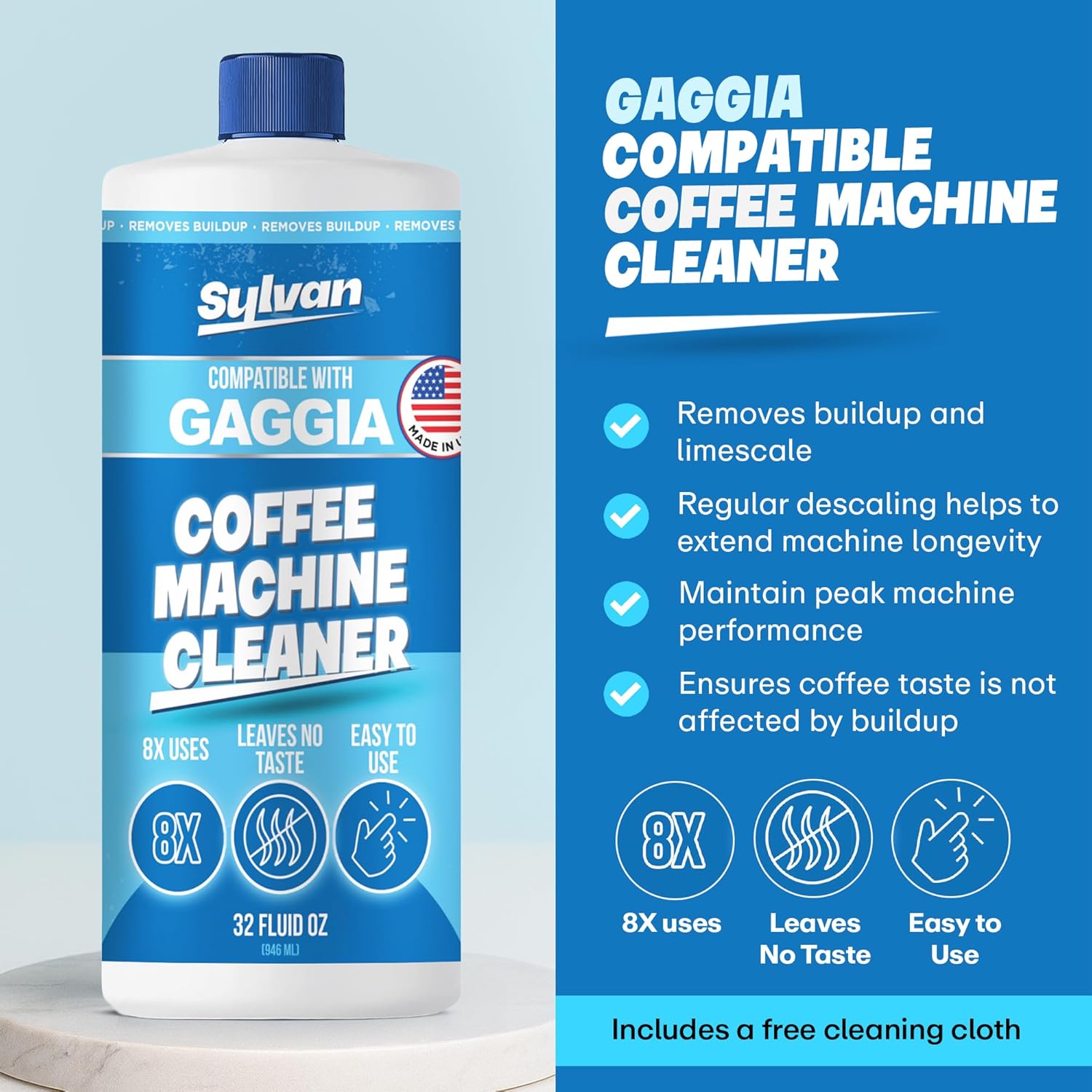
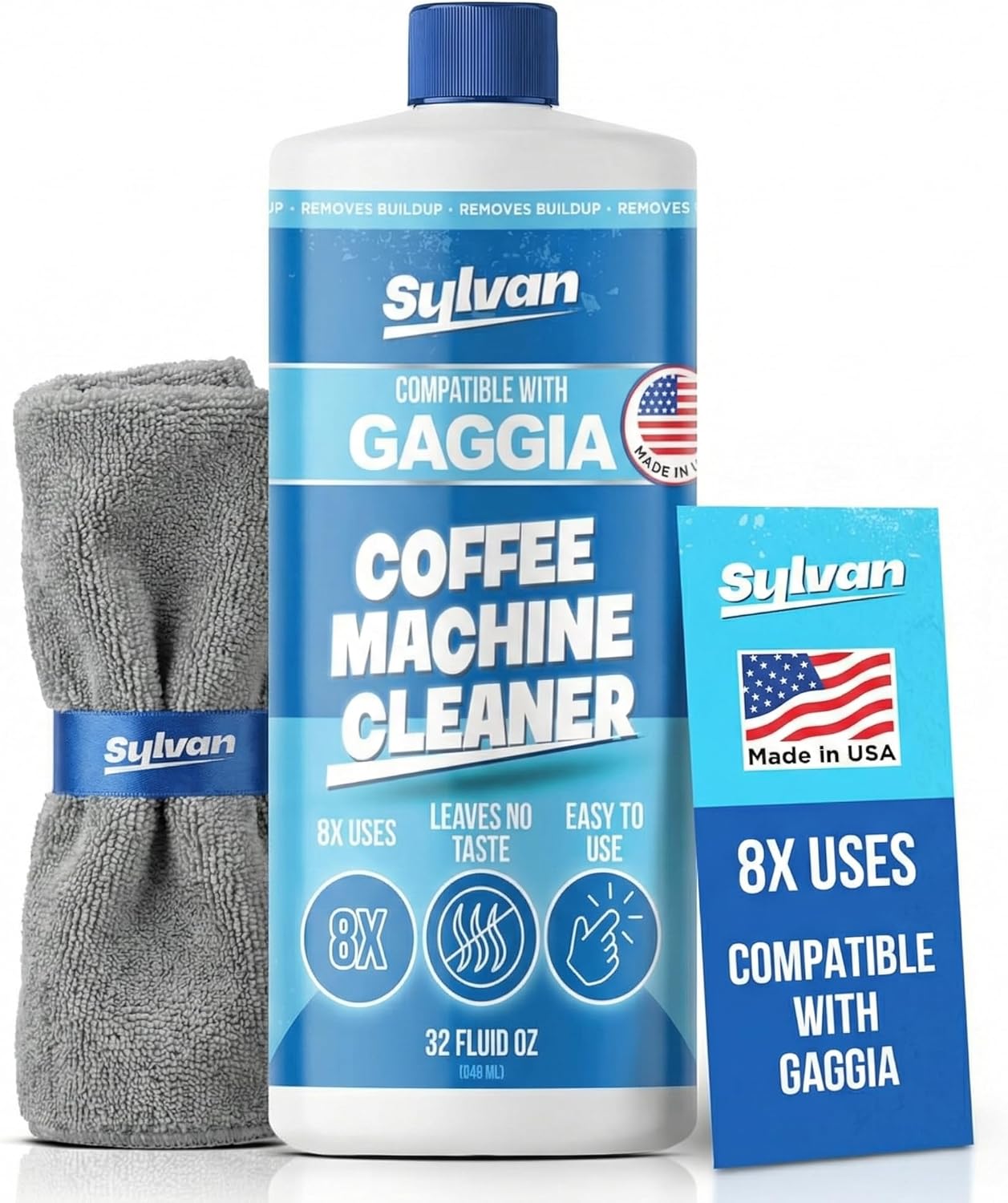
For routine gaggia maintenance, citric acid wins on every axis that matters in a machine you drink from. Our Descaling Solution for Gaggia is citric-based, biodegradable, formulated for all Gaggia models — Classic, Brera, Anima, Accademia, Babila, Cadorna, Velasca — and works as a descaling solution for espresso machine brands beyond Gaggia, from Breville to Rancilio. The same scale chemistry shows up across the kitchen: our ice machine cleaning guide covers its other major habitat.
Backflushing vs. descaling: not the same job
Espresso machine cleaning has two independent tracks, and conflating them is the most common maintenance mistake:
- Backflushing cleans coffee oils from the group head, shower screen, and three-way valve, using a blind basket and an alkaline espresso detergent. On a Classic/Classic Pro (which has a three-way valve), backflush with detergent every 1-2 weeks of daily use. Machines without a three-way valve must not be backflushed.
- Descaling cleans minerals from the boiler and water path with acid, on the schedule above.
One is alkaline and chases oils; the other is acid and chases rock. A machine that gets both tastes like it did out of the box, indefinitely.
Prevention: start with better water
Every descale you avoid is wear you avoid. Use a tank filter (Gaggia's Intenza, or a Brita-filtered fill for manual machines) to cut hardness before it reaches the boiler, and set your super-automatic's water hardness setting honestly so its alert fires at the right time. Skip distilled water — scale-free but flat-tasting, and too low-mineral for some machines' sensors. Filtered moderate water plus a scheduled descale is the configuration that keeps a Classic alive for decades, and there are 20-year-old Classics on original boilers to prove it.
The cost math
The best descaler for Gaggia machines is also the cheap option. Single-use descaling kits run $8-12 per descale. Our 32 oz bottle is $13.99 and measures out 8 descale cycles — a 12-month supply for most households, or about $1.75 per descale, with a free cloth in the box. Against a $40-80 replacement boiler element (plus your time with a screwdriver, or a repair bill), quarterly descaling is the highest-ROI habit in espresso.
The bottom line
Descale Gaggia Classic Pro and manual machines with a staged dwell-and-flush of citric descaling solution; let the Brera and its super-automatic siblings run their own program; rinse with two full tanks; and repeat on a schedule set by your water hardness. Skip the vinegar, keep backflushing as its own separate routine, and your Gaggia will outlast several grinders.
Browse the Kitchen & Home collection for more US-made specialty cleaners, or see the full lineup of US-made formulas on the product page.


