How to Descale a Coffee Maker: Vinegar vs. the Real Thing
Every coffee maker dies the same death: scale. Heat water, and the dissolved calcium and magnesium in it precipitate out as limescale — a chalky crust that coats the heating element, narrows the tubing, and throttles the machine degree by degree. The coffee brews cooler and slower, the pump strains, and one day the machine that "just stopped working" was really just entombed in minerals.
Descaling reverses it, and you have two honest options: the vinegar in your pantry or a purpose-made descaling solution. Both work. They are not interchangeable in every machine, though, and the internet tends to oversell one or the other. Here is the straight version — what vinegar does well, where it falls short, what the commercial solutions actually are, and a machine-by-machine and hardness-by-hardness guide.
What scale is and why acid fixes it
Limescale is mostly calcium carbonate — the same mineral as chalk. It is nearly insoluble in water but dissolves readily in mild acid, which converts it to soluble salts that rinse away. Every descaling method is just a question of which acid: acetic (vinegar), citric (most commercial descalers and the kind in our own formulas), lactic, or sulfamic (heavy-duty commercial products). The acid does not scrub anything; it chemically un-makes the crust wherever the solution can reach.
The vinegar method: an honest take
For a basic drip coffee maker, vinegar is legitimately good. It costs pennies, it is in your pantry right now, and acetic acid dissolves scale reliably.
How to do it
- Mix 50/50 white vinegar and water and fill the reservoir. (Straight vinegar is rarely necessary and makes rinsing worse.)
- Run half a brew cycle, then switch the machine off and let it sit 30-60 minutes so the acid can work on the hot internals.
- Finish the cycle, dump the carafe, and marvel at any white flecks — that was your heating element's crust.
- Rinse with 2-3 full cycles of plain water — more if you can still smell vinegar in the hot output. Under-rinsing is the number one complaint with this method.
The caveats nobody puts in the hack videos
- Taste and odor linger. Acetic acid clings to plastic and silicone; expect several rinse cycles, and possibly a faintly sour first pot anyway.
- Seals and metals. Over repeated use, acetic acid is harder on rubber gaskets, and it should not meet aluminum boilers (some older machines and moka pots) at all.
- Warranty language. Several manufacturers specify "descaling solution only" in the manual — espresso machine makers almost universally, and some pod-machine manuals too. Vinegar will not usually be detectable, but if a machine under warranty fails, the manual is what the service center points to. Read yours before deciding.
Citric acid descalers: what you are paying for
Commercial descaling solutions are not exotic — most are citric or lactic acid at a tuned concentration, sometimes with surfactants that help the acid wet the scale. What the formulation buys you: faster, cleaner rinsing with no lingering taste; gentler chemistry on seals, gaskets, and brass or steel boilers; and compliance with the manual for warranty purposes. For a $25 drip machine, that is arguably optional. For a $400 espresso machine, it is cheap insurance.
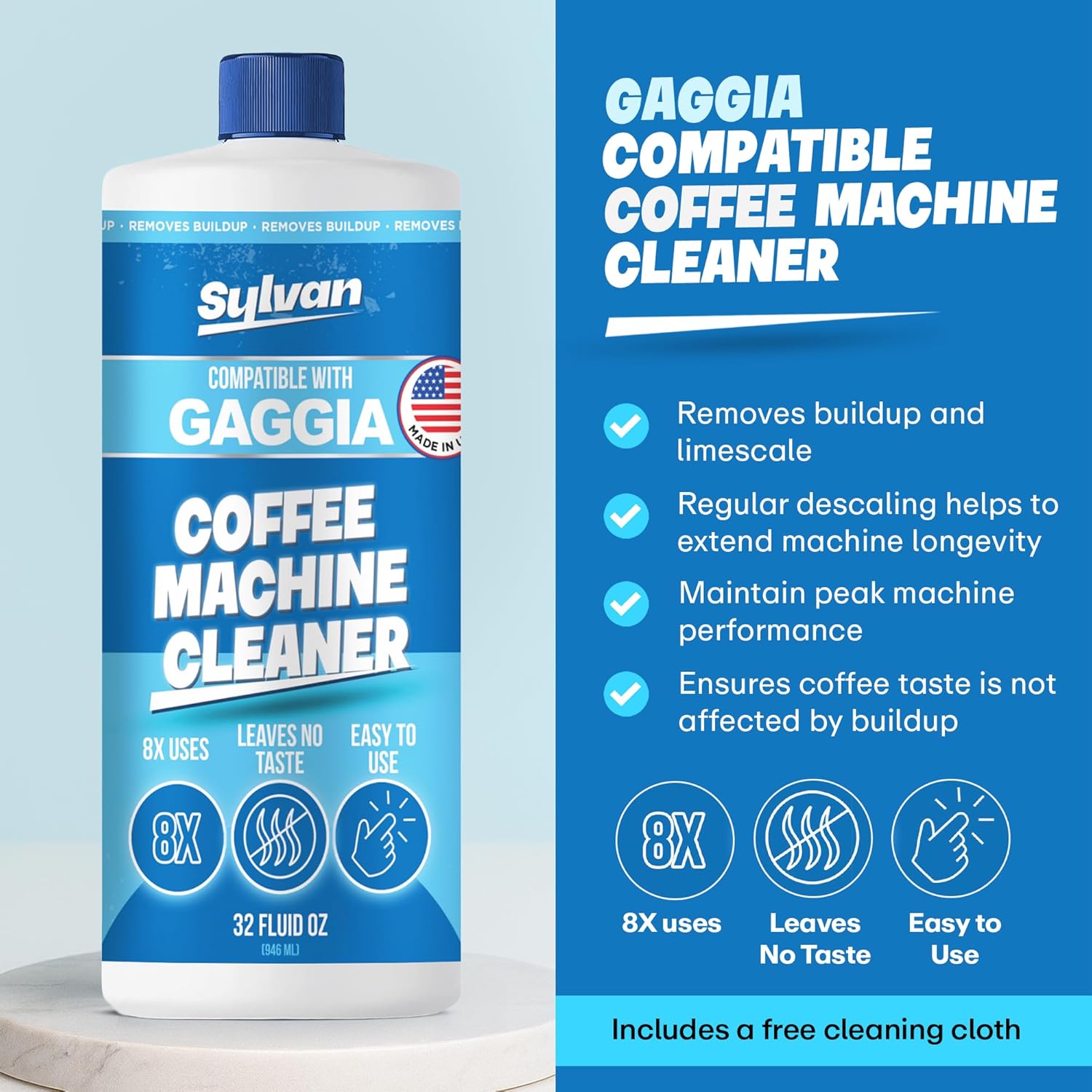
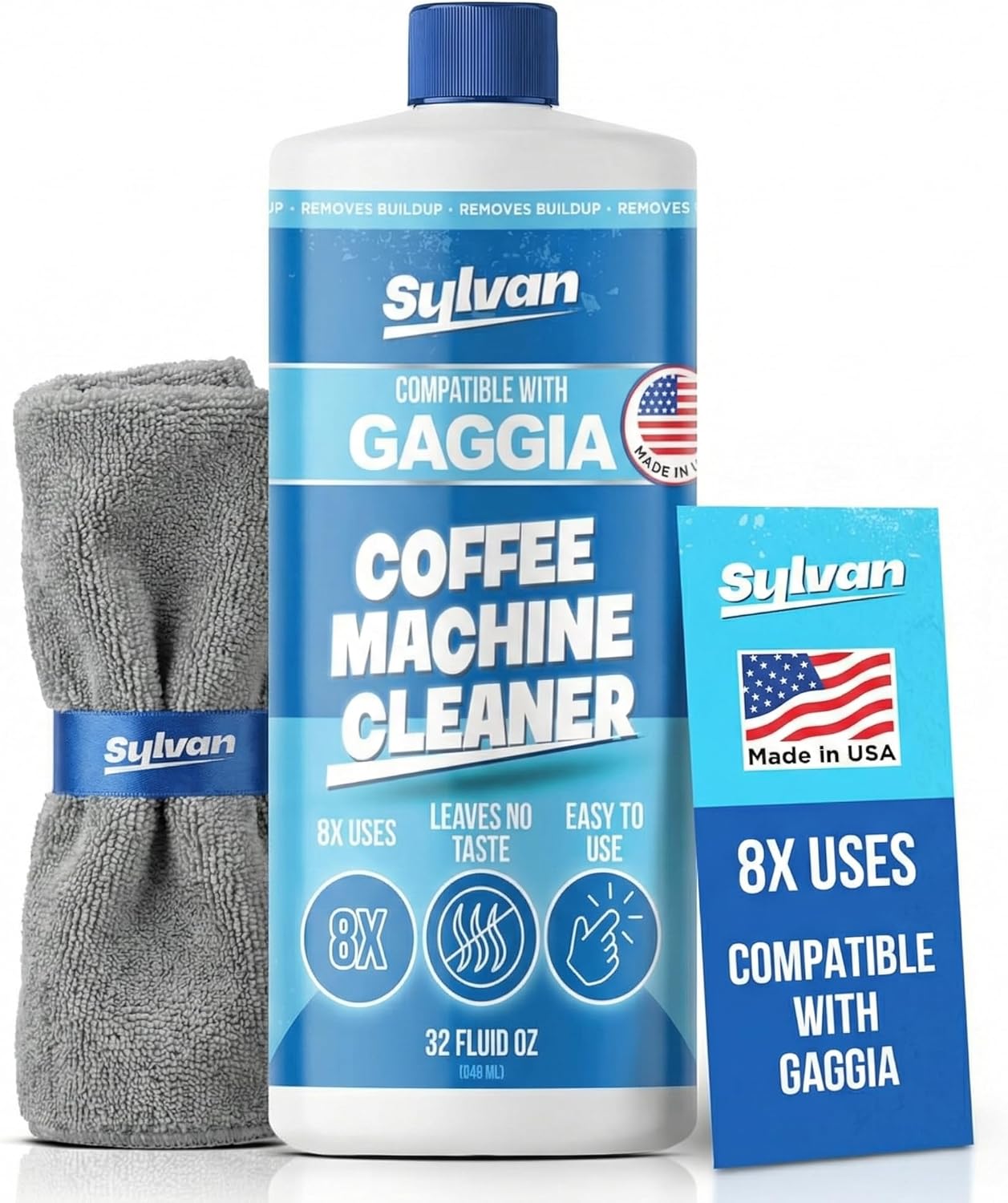
For espresso machines specifically, we make a citric-based descaling solution — one 32 oz bottle covers eight descale cycles, and despite the name it works in Gaggia, Breville, De'Longhi, Saeco, and other home espresso machines alike. The full walkthrough is in our espresso descaling guide. The same nickel-safe citric chemistry is behind our ice machine cleaner and descaler, because scale is scale whether it grows in a boiler or an ice maker.
Machine-by-machine notes
Drip coffee makers
The most forgiving category. Vinegar or citric descaler, run per the steps above. Wash the carafe and brew basket with dish soap while you wait — coffee oil rancidity causes more bad flavor in drip machines than scale does.
Keurig and pod machines
Scale hits pod machines hardest because their water paths are narrow — the classic symptoms are short cups, slow drips, and loud pumping. Run the descale per the manual (reservoir of solution, repeated large-cup brews with no pod, a 30-minute hot soak, then a full reservoir or two of rinse water). Keurig sells its own solution and its manuals push it; a 50/50 vinegar run works on most models, with the same rinse diligence. Newer Keurigs have a descale mode — use it, since it times the soak for you.
Espresso machines
The high-stakes category: boilers, three-way valves, and fine tubing that scale can ruin outright, plus manuals that specify descaler chemistry. Use a citric-based solution, follow the machine's descale procedure exactly (many require flushing through both the brew head and the steam wand), and rinse generously. Machines with water softening pod filters in the tank still need descaling — just less often.
How often? Match the schedule to your water
Scale rate is water hardness times volume. Find your municipal water report (or use test strips), then:
| Water hardness | Daily brewing | Occasional brewing |
|---|---|---|
| Soft (0-60 ppm / 0-3.5 gpg) | Every 4-6 months | 1-2x per year |
| Moderate (60-120 ppm / 3.5-7 gpg) | Every 2-3 months | 2-3x per year |
| Hard (120-180 ppm / 7-10.5 gpg) | Every 1-2 months | Quarterly |
| Very hard (180+ ppm / 10.5+ gpg) | Monthly | Every 2 months |
Descaling is not cleaning: the coffee-oil half of the job
A machine can be perfectly descaled and still brew bitter coffee, because scale is only half the maintenance story. The other half is coffee oil — the aromatic compounds that make coffee taste good go rancid as residue, and they coat everything the brewed coffee touches: the carafe, the brew basket, the shower head, a Keurig's needle and pod holder, an espresso machine's group head and portafilter.
- Weekly: wash the carafe, basket, and any removable brew-path parts with hot water and dish soap. A cloudy carafe cleans up with a baking soda slurry or a soak of warm water and a denture tablet.
- Monthly: wipe the shower head (drip machines) or clean the needle (pod machines — a straightened paper clip clears coffee grounds from the puncture needle, with the machine unplugged). Espresso owners should backflush per the manual with a detergent made for the job.
- The reservoir: empty it, wipe it, and let it dry occasionally. Standing water grows biofilm, especially in warm kitchens — if the reservoir walls feel slippery, that is what you are feeling.
Descaling handles the mineral side; soap and backflushing handle the organic side. A machine getting both tastes new for years.
Signs you are overdue
- Brew cycles noticeably slower than when the machine was new
- Cooler coffee — scale insulates the heating element
- White or gray flecks in the carafe or cup
- Loud pump noise, sputtering, or short fills
- The descale light (believe it — it is usually a volume counter, and it is usually right)
Descaling is the rare maintenance chore with instant, tastable payoff: hotter brew temperature, faster cycles, and a machine that lasts years longer. Put it on the calendar with your water hardness in mind, pick the acid that suits your machine and its warranty, and rinse like you mean it. More kitchen-equipment deep cleans live in our Kitchen & Home collection, including the companion guide on cleaning ice machines — the other appliance quietly filling with scale.

